.png?width=150&height=40&name=102723_ClowderLogo%20(1).png)
.png?width=127&height=34&name=102723_ClowderLogo%20(1).png)
Trade & Professional Associations
Dedicated space for your members to connect and engage with each other.


Increase member engagement with news feeds, a resource hub, and more.


.png?width=300&name=member%20communication_feature%20(1).png)
Clear communication is non-negotiable for engaging and retaining your association’s members. According to the 2026 Membership Performance Benchmark Report, increasing engagement and retention are the top two goals of membership organizations.
In this guide, we’ll help you understand the best practices and strategies for building a solid member communication plan that serves your organization for years to come. Here is what’s in store for you:
Keep in mind that an effective, forward-thinking communication strategy should be highly focused on digital and mobile communications. As more Millennial and Gen Z professionals join associations, your outreach efforts should include email, paid digital advertising, text messaging, app notifications, and other digital channels. This approach will help your organization stay current and better meet members’ needs.

Member communication encompasses all of the outreach and messaging strategies your association uses to deliver essential information to members, keep them engaged with your offerings, and retain them long-term. Successful member communications are clear, consistent, transparent, and welcoming. They are also multi-channel, spanning platforms such as email, social media, websites, apps, and SMS.
Strategic member communications offer several advantages to your organization, such as:
Most importantly, comprehensive member communication adds value to your memberships. When members hear from you consistently, and your communications highlight information and opportunities relevant to their interests and needs, they’ll fully understand the advantages of involvement with your association.
As mentioned above, digital channels should be your top priority in member communications, as well as speaking directly to your member base at in-person meetings and events. Focus on digital engagement platforms such as:
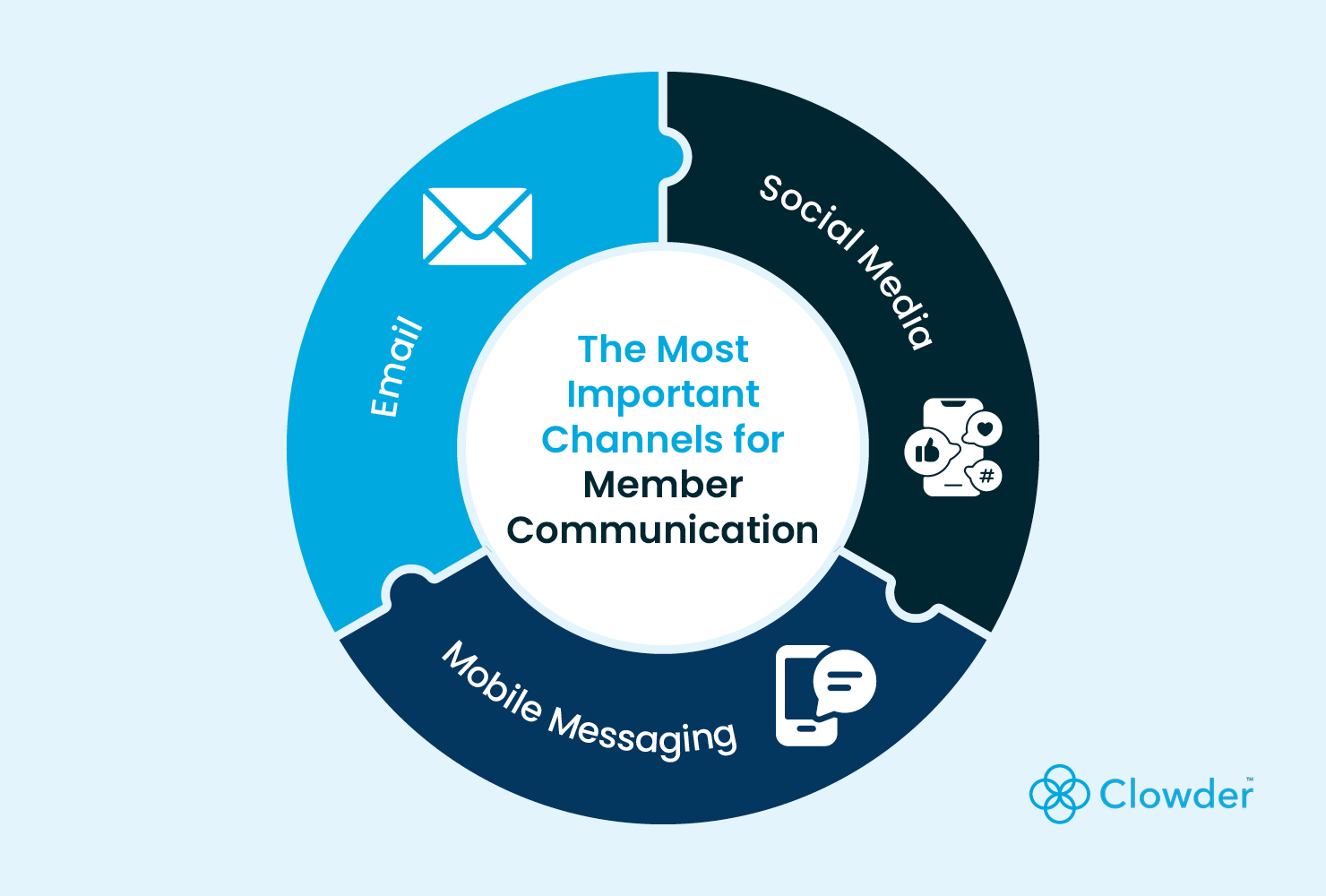
If some of your members still prefer tangible outreach, consider incorporating print communications, such as direct mail, to help reinforce your online messages. This strategy is effective for reaching every corner of your member audience, regardless of their preferred communication channel.
Member communications isn’t just about using the right platforms—the tone, timing, and formatting of your messages are all essential to connecting with your members and building strong relationships. With that in mind, we’ve compiled a list of best practices to help you shape your strategy.
Different members require different communication approaches. For example, new members need clear, comprehensive information on how to get involved in member opportunities, while long-time members benefit more from opportunities to mentor others and shape the association’s strategic direction.
Mapping the member journey helps you meet members where they are and provide them with information relevant to their stage of engagement. Consider defining the following stages of association membership:
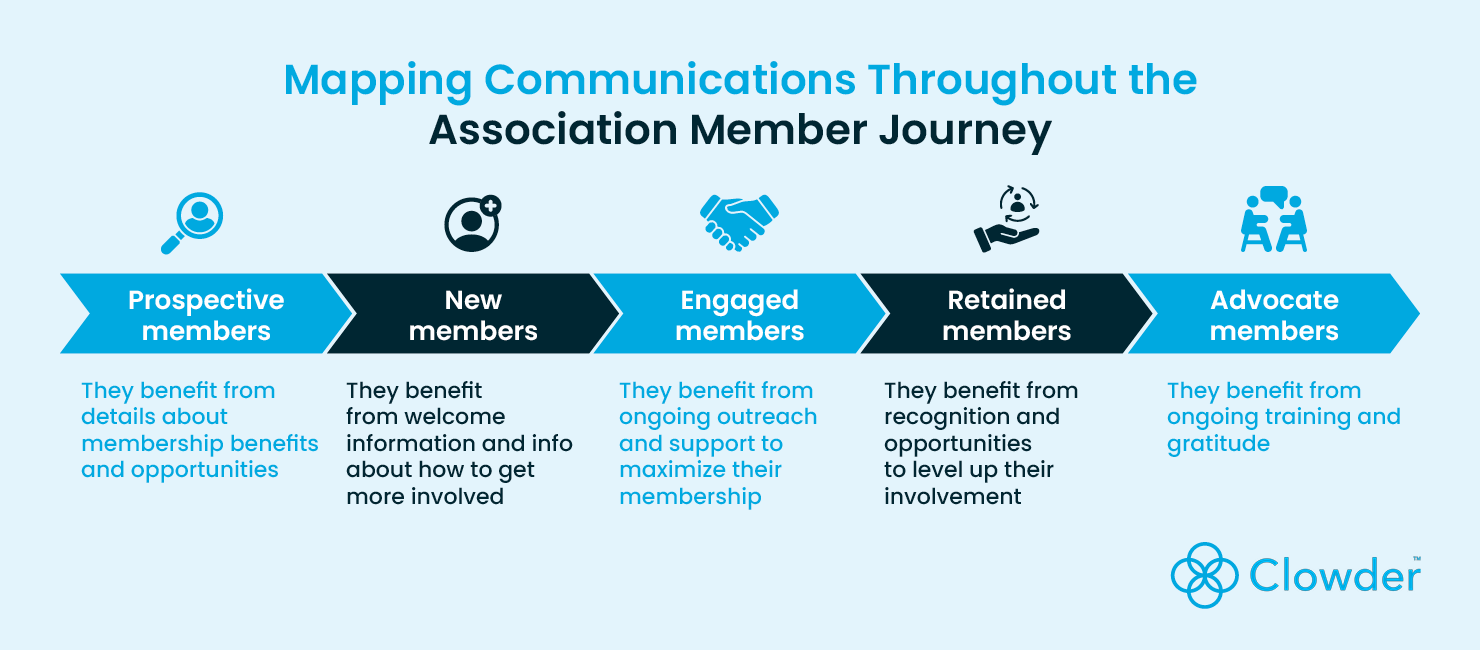
Remember that churn can happen at any stage, so your membership mapping process should also focus on pinpointing at-risk and lapsed members. Reach out to these members with surveys to ask about their experience and what you can do to keep them involved.
Beyond membership status, segmenting your members by additional characteristics can help you personalize your outreach strategies for a more tailored member experience. For example, you may also group members based on their:
Leverage these groups to develop even more targeted communications that speak to members’ needs and interests. For instance, you might send in-person event invitations to members who live within 25 miles of your association’s headquarters. You may also invite members of your association who joined for networking opportunities to your in-person meetups and virtual conferences.
Beyond segmenting your communications for targeted outreach, you should also personalize your messages. But true personalization goes beyond merging a name into a subject line (though doing so accurately is essential). To build real rapport, your communications should leverage behavioral data to provide context and value. Incorporate the following elements when relevant:
This level of personalization shows members that you care about them as individuals and want to help them make the most of their membership. To help you personalize at scale, leverage automation where possible and keep the member information in your association management system (AMS) up to date.
Studies have shown that companies that maintain brand consistency have experienced revenue increases of up to 23%. The same idea applies to your association—a consistent, memorable brand can help you boost member retention and non-dues revenue.
Your brand should be consistent across both visual and message-related elements:
To ensure consistent messaging, your association should create a comprehensive style guide for your communications team. Include specific brand guidelines, such as detailed instructions on logo usage (both permitted and restricted) and a list of key phrases to incorporate into communications as appropriate, so anyone inside or outside your association who assists with marketing has a detailed source of truth to reference.
Members have put their trust in your association to help guide them professionally. Your organization owes them transparency and two-way communication in exchange for their support—and by doing so, you can build stronger member relationships that lead to retention.
Maintain transparency in your communications by sharing your organization’s successes and its difficulties. If your association is facing challenges, inform members and clearly explain how they can help. For instance, if you’re experiencing a decline in new member recruitment, you may implement a referral program that offers incentives to current members for bringing in new recruits.
Additionally, ensure your data tells the full story of your organization’s performance. For example, if an annual survey shows a dip in satisfaction regarding a specific member benefit, share those results openly. Instead of burying the data, present it alongside a concrete “Roadmap for Improvement” that outlines exactly how you plan to address those concerns over the coming year. This proves to members that their feedback isn't just collected, but actually drives organizational change.
Between their jobs, personal lives, membership-related activities, and hobbies, your members are busy. They’re more likely to skim your messages than read every word in detail, especially digital and mobile ones.
That’s why writing clearly and concisely is essential. Keep your messages and paragraphs short, and use subheadings and bullet points to break up long blocks of text. Put essential information at the top of content like emails and blogs so members can get the must-have details right away.

Every member should gain value from your communications—including those with disabilities. Make accessibility a key priority by following guidelines such as:
Test your communications using accessibility tools before sending them out to your audience. For example, you can run new website pages through a free tool like Lighthouse to catch any accessibility errors and correct them.
Engaging communication doesn’t always have to be top-down. Peer-to-peer interactions between members can help them form personal and professional bonds that serve them long-term.
Facilitate ways for members to communicate with each other through:
Allowing members to hear from and engage directly with their peers can foster a stronger sense of community at your association, making it much more likely that they’ll stay involved for years to come.
Tracking the results of your member communications helps you capitalize on what’s working and fix what isn’t. Use your marketing and communications platform to track key data points like:
In addition to this quantitative data, you can also gather qualitative feedback by sending member surveys that ask for their perspective on your communications strategy. You may ask for feedback about the frequency, content, and format of your messages. Keep your surveys brief to encourage more members to leave their comments.
Member communications can involve many types of software, such as an AMS, a website builder, an email platform, and more. However, the most effective member communications strategy doesn’t just add more tools—it integrates them into a seamless experience for members and association staff alike.
Specifically, a mobile app can help your marketing team centralize a lot of functionality in one place. While an AMS houses your data and an email platform pushes updates, a mobile app serves as the interactive hub where members actually engage. By meeting members where they already spend their time—on their phones—you can remove the friction of logging into multiple portals and make engagement a daily habit rather than a monthly chore.
Our top recommendation for a mobile app that can help you engage with your community anytime, from anywhere, is Clowder.
Clowder is an engagement platform designed specifically for the unique needs of associations. It goes above and beyond typical association engagement solutions by offering features like:
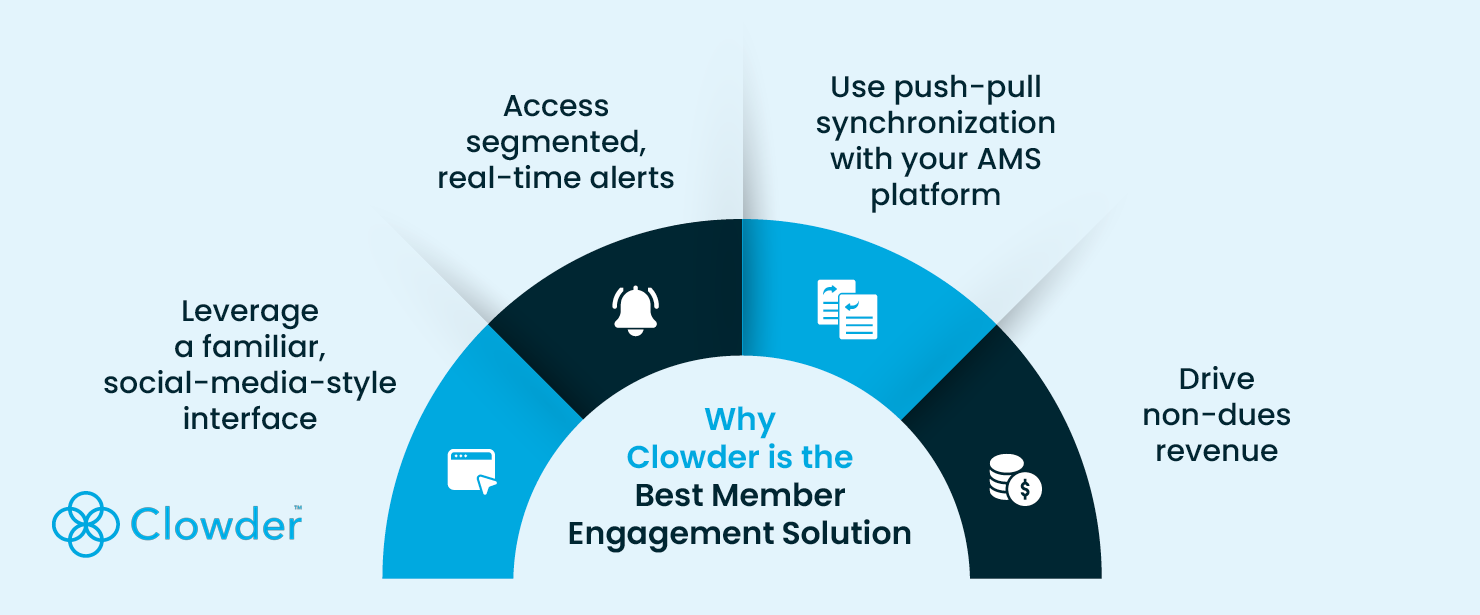
Clowder transforms your member retention strategy from a yearly discussion into continuous, daily engagement. When members habitually check your app each morning for the latest news or to connect with peers, their decision to renew becomes practically guaranteed.
Updating your member communications approach offers an unparalleled opportunity to discover new ways to connect with your members on a deeper level and build more meaningful relationships. And when your strategies align with your communication platforms, you’ll have all of the tools you need to grow your membership and improve the member experience.
Looking for more member engagement tips? Check out these additional resources from Clowder: